
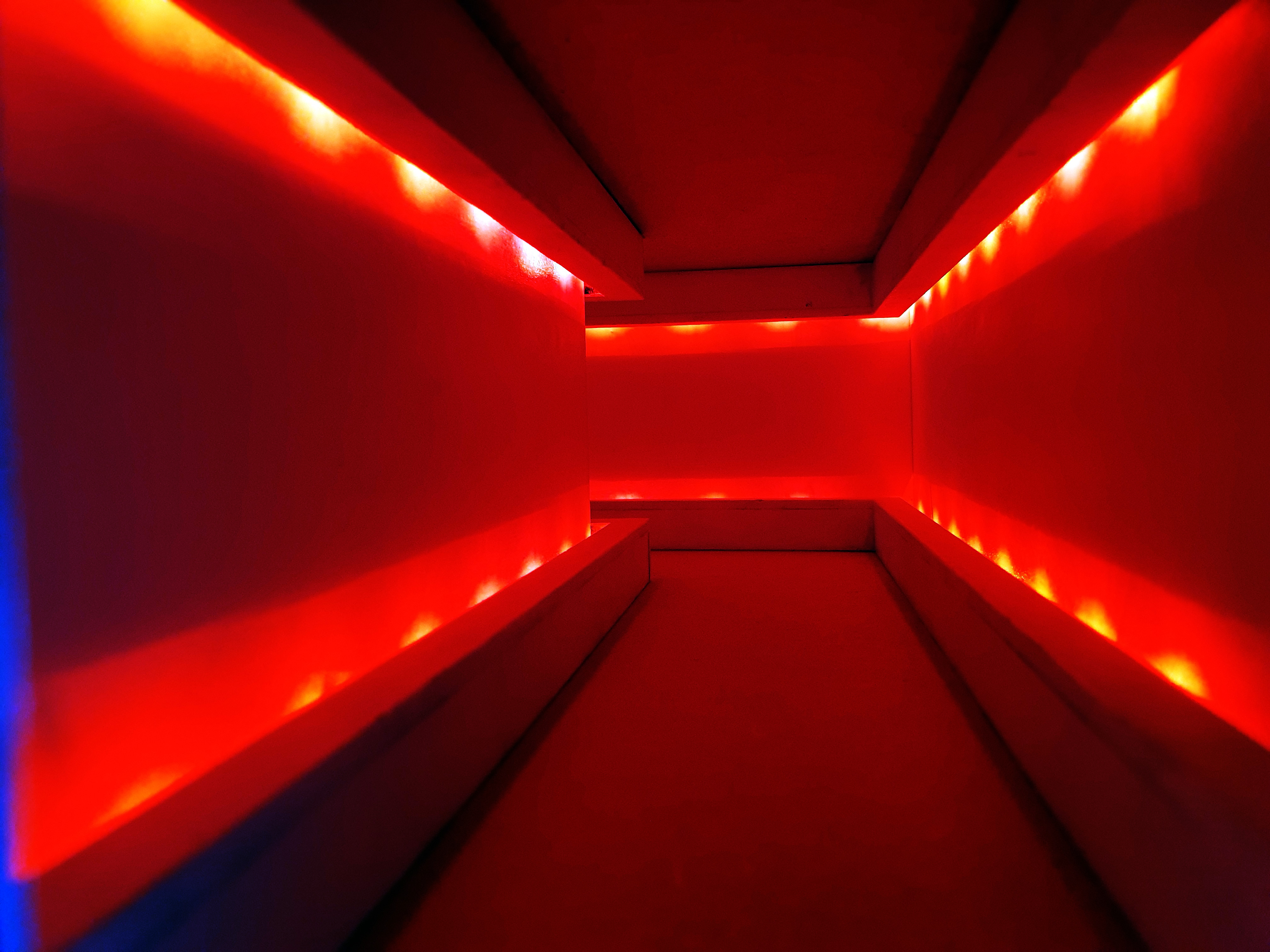
Between #2, Photograph, A2

Between #1, Photograph, A2
The final edits of the photographs from the corridor model. Printed at A2 for the exhibition.
The final edits of the photographs from the corridor model. Printed at A2 for the exhibition.


The finished model. More an architectural piece than the other models. Mountboard, MDF (some balsa wood too) and styrene. The water is a block of dyed resin with another piece of mountboard beneath it. The trees are actual twigs, glued together to form branches and topped with a mixture of those weird coloured foams used on model railways to portray bushes. And some model railway ballast around their bases.


Laser Cutter worked great after spending a while getting my head around Adobe Illustrator. The interior walls are painted white and the red LEDs colour the scene nicely. This piece alludes to an earlier oil painting of mine (sideways).

Not quite as dark or oppressive as the painting, but in honesty I had never intended for the painting to have that feeling (though I was happy with the unexpected result).
I have video of the lights, but the files were too powerful for email. Will post later.
The corridor and the room above it will be almost completely enclosed for the exhibition, save for the doorway leading into the corridor. The first section of the corridor can thus be viewed through the doorway, an endoscope (depending on the quality of the picture) will give view around the corner of the corridor and finally a webcam inside the room above will stream the interior to a laptop for viewing.
This “closed of” nature of the model reflects the nature of digital place in it’s inaccessibility and its necessitation of viewing via monitor. The laptop and webcam serve as the “vehicle” to allow us into the “imagined” (yet in this case still physical) space of the model, just as a computer interprets data to act as a “vehicle” for us through digital space.

Unhappy with the original floor (it was a bit haphazard and basic) I had already decided to improve or, as it turned out, make an entirely new one with some clay and a coat of PVA.


After being left to dry the clay shrank considerably enlarging the gaps between the slabs beyond my intentions but also creating some nice cracks.

Plaster used as what is essentially grout.

And the results after a bit of paint. Since the model is getting photographed today I used some ground up pastel to knock back the bright white of the grout before getting all the props back in place. I’ll have photos of that soon.


Mountboard, with MDF and balsa wood supports. More of an architectural style model than the previous.
My work has so far been ‘art for the sake of art’ by it’s nature. I came to create these models through my interest in phenomenology and the exploration of ‘place’. But I still consider further applications of these scale models, usually things far out of my budget range and probably not practical.
The work of stop-motion artists, particularly those who works on the sets rather than the figures, have been a good source of ideas and techniques. While I’m not sure I have the patience for animating stop motion cinema, I found the idea of telling stories through this miniature medium interesting. David Tremont of Weta Workshop uses still photography of miniatures to create something akin to a comic or graphic novel. Speech and ‘special effects’ added afterwards digitally (I presume).
I was always fond of the ‘live-action’ video games (that rarely seem to exist these days) especially the Myst series of games where even through the pixelation of the older games you could tell it was real people speaking to you. It draws you in and adds something to the story and characters that CGI has never quite been able capture. Myst used pre-rendered digital scenes which actors were green-screened (or blue in this case) into. (Making of Myst:Exile) I had the idea of using the same technique to green-screen actors into the miniature set. Of course as previously stated this would be a lot more money and time than I have to invest right now, though it is an idea I will keep in a mind.
I was always mostly interested in making video games and so I naturally I considered the above technique and other ideas (augmented reality games for instance) as potential further uses of my current work. In a fortunate and strange coincidence the video game Trüberbrook was released on steam just days after I had discussed this idea. While it doesn’t use live action, it does feature entirely hand made real miniature sets. CGI characters (modelled to look similar to clay-mation figures) are then superimposed into scene. Technical breakdown here
In my understanding they use real lighting for the sets, that are then colour-graded and ‘enhanced’ with digital effects.
They also use photogrammetry, something that I didn’t fully understand at first, but after some quick research discovered a technique for creating a digital 3d scan of an object using only digital photography (and a bit of advanced computer software). I’ll have to look into this and have a go assuming I can get hold of some of the software without selling a kidney.


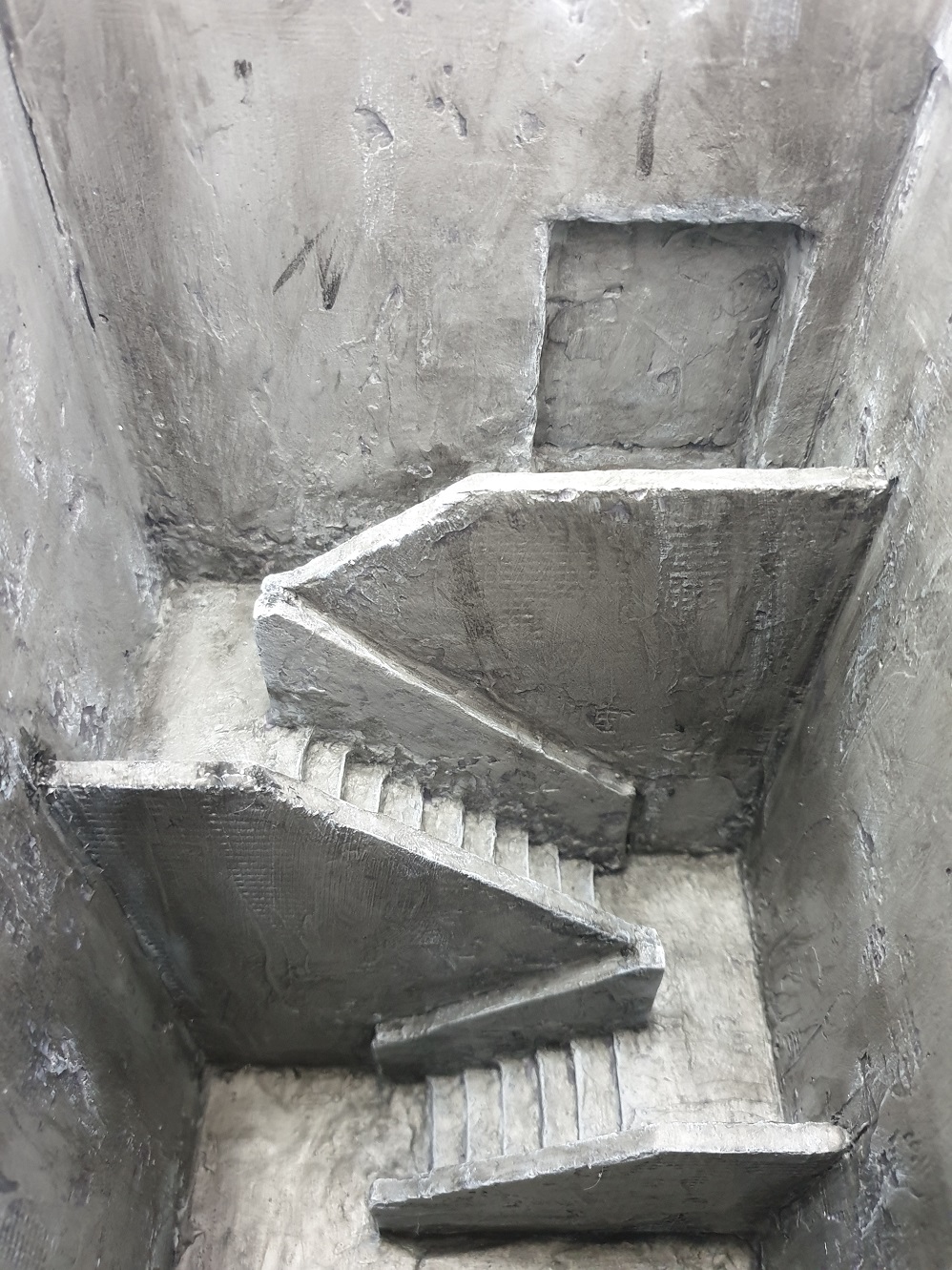
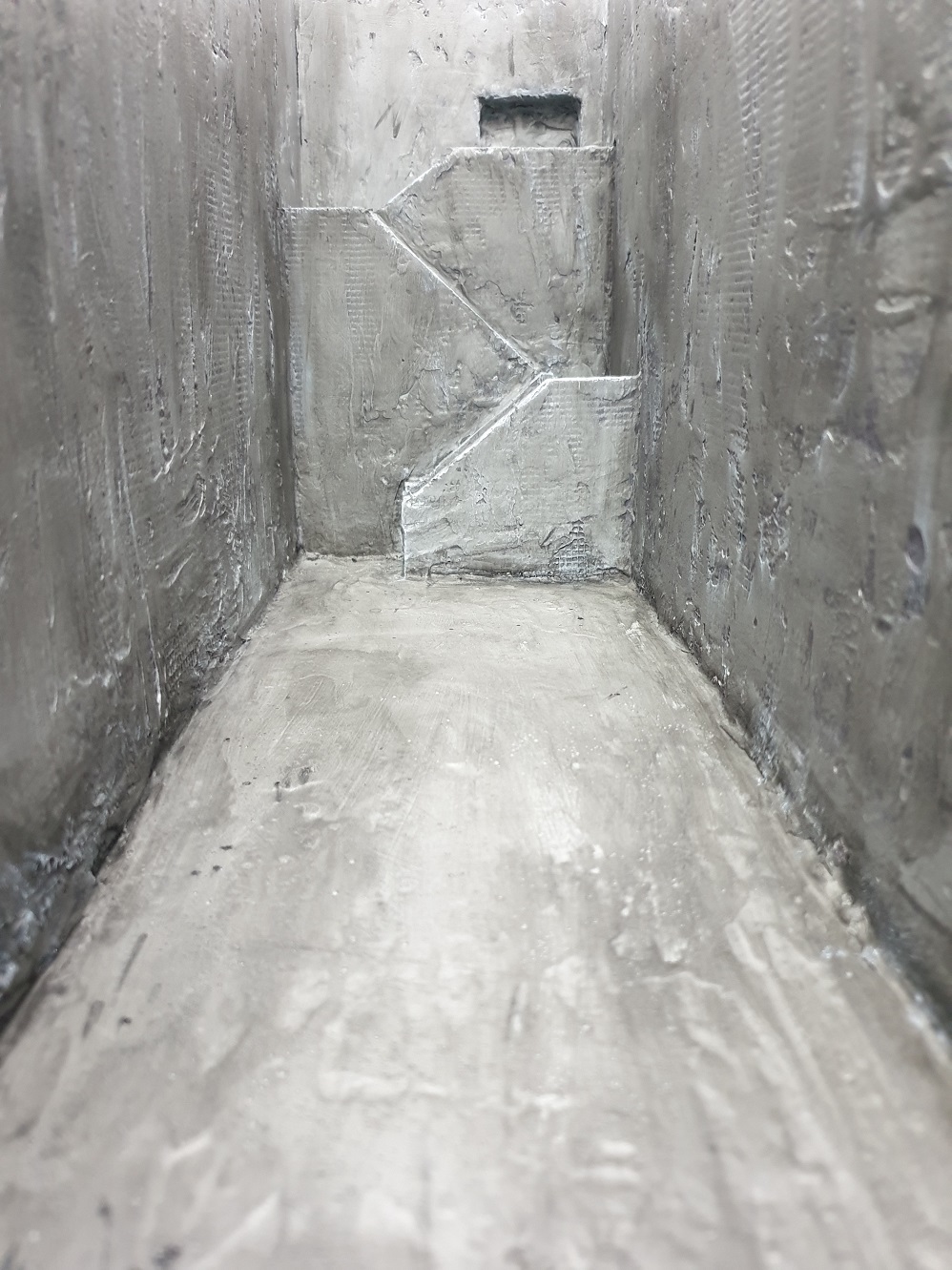
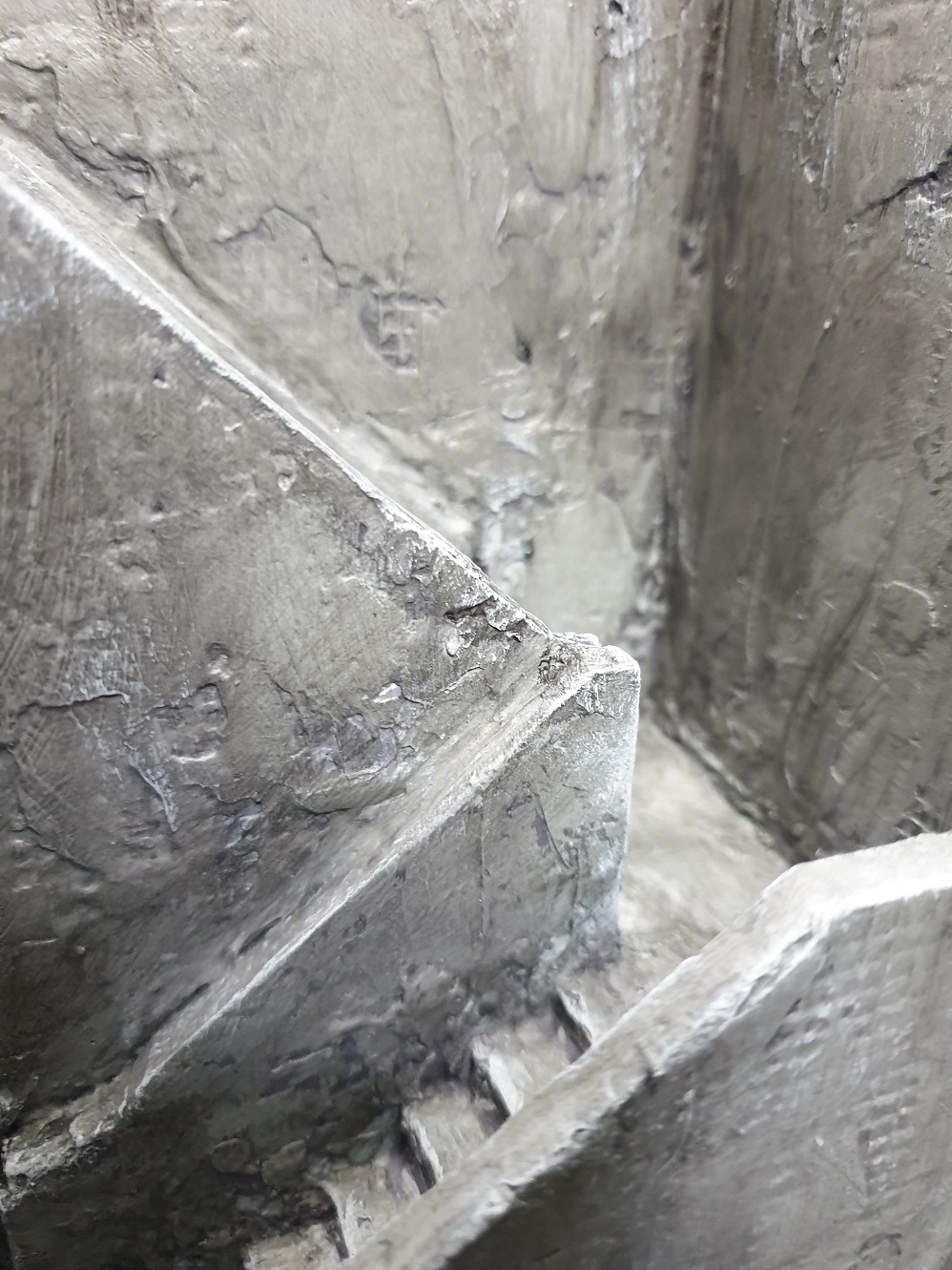
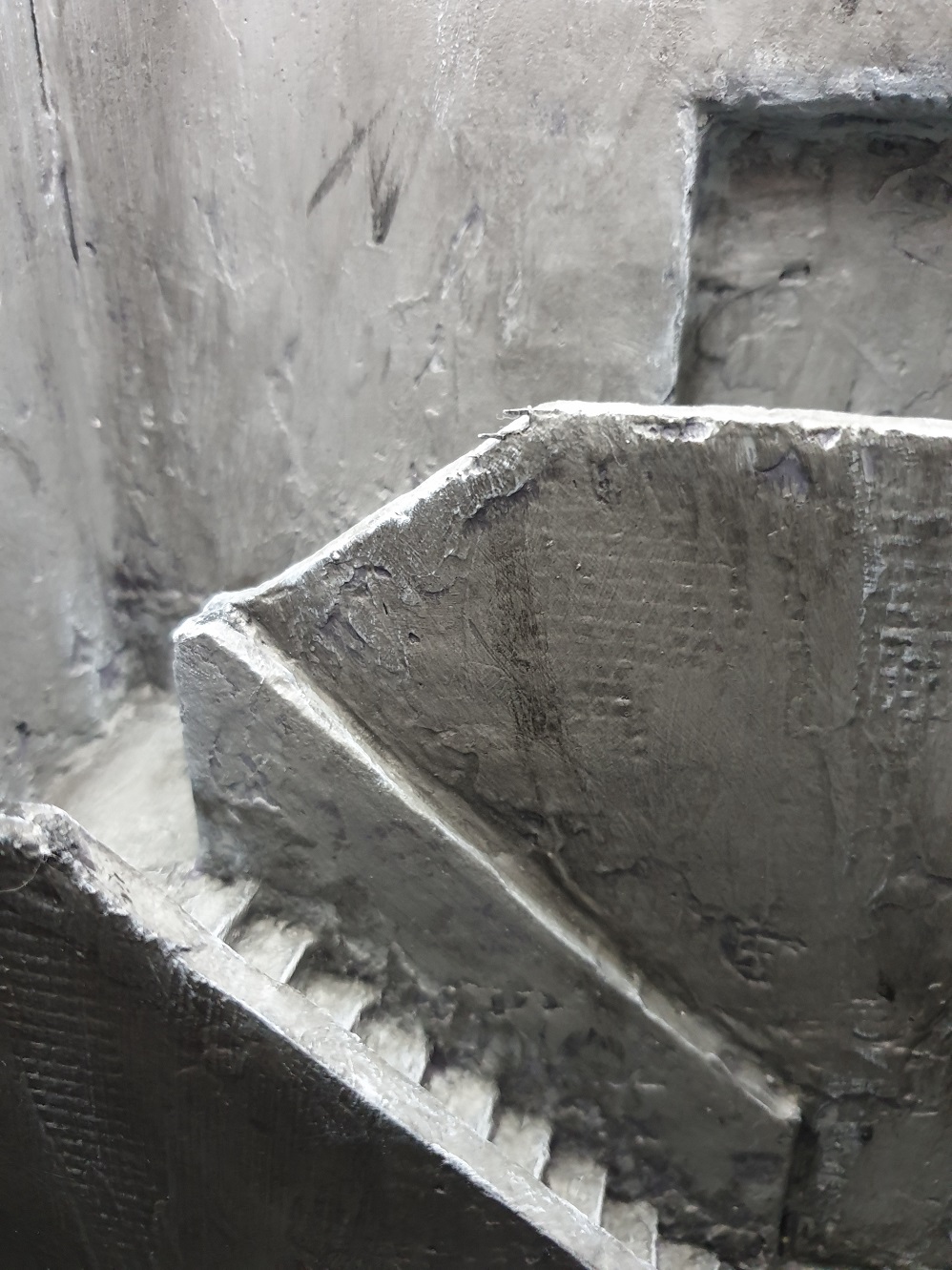
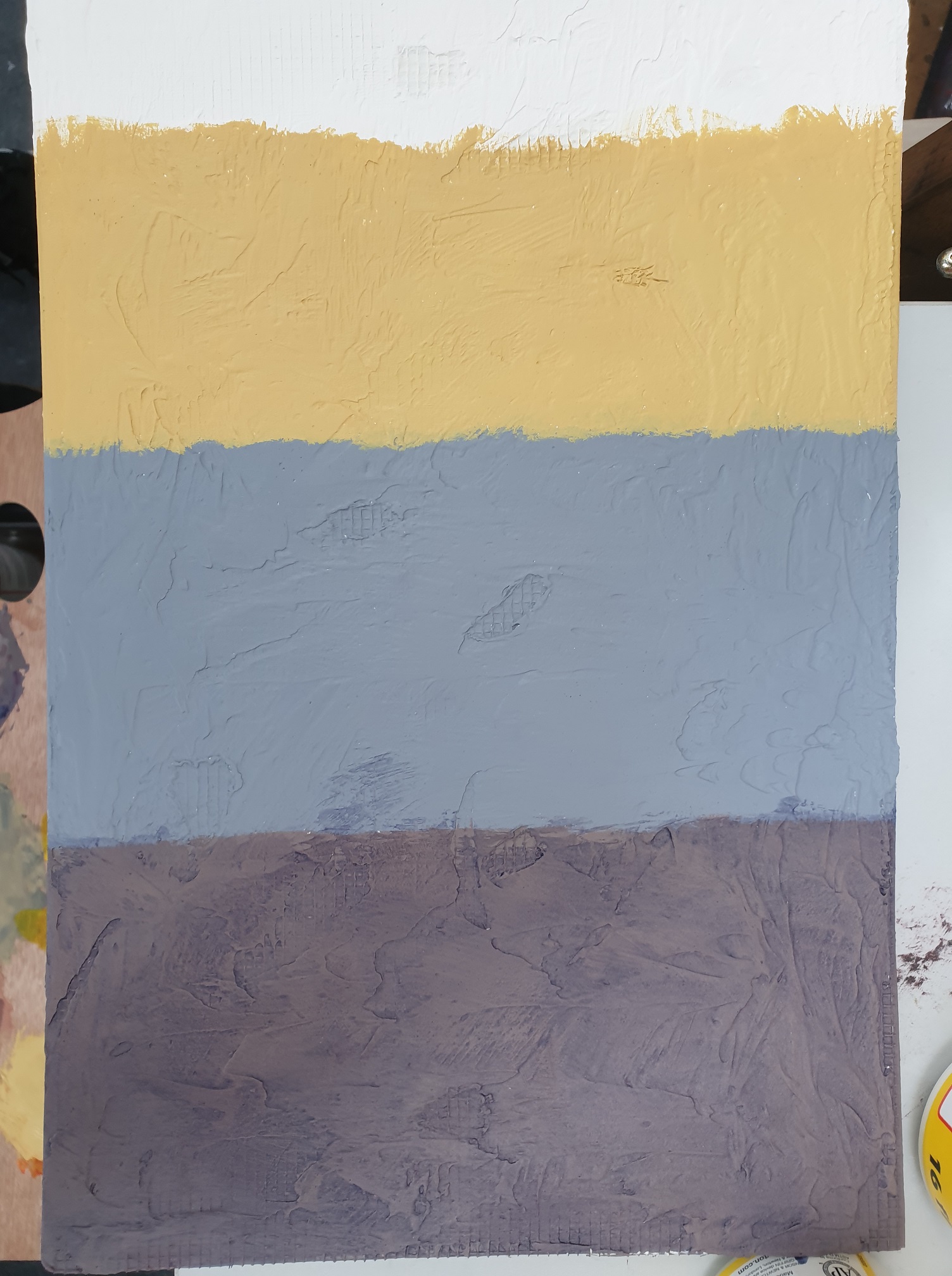
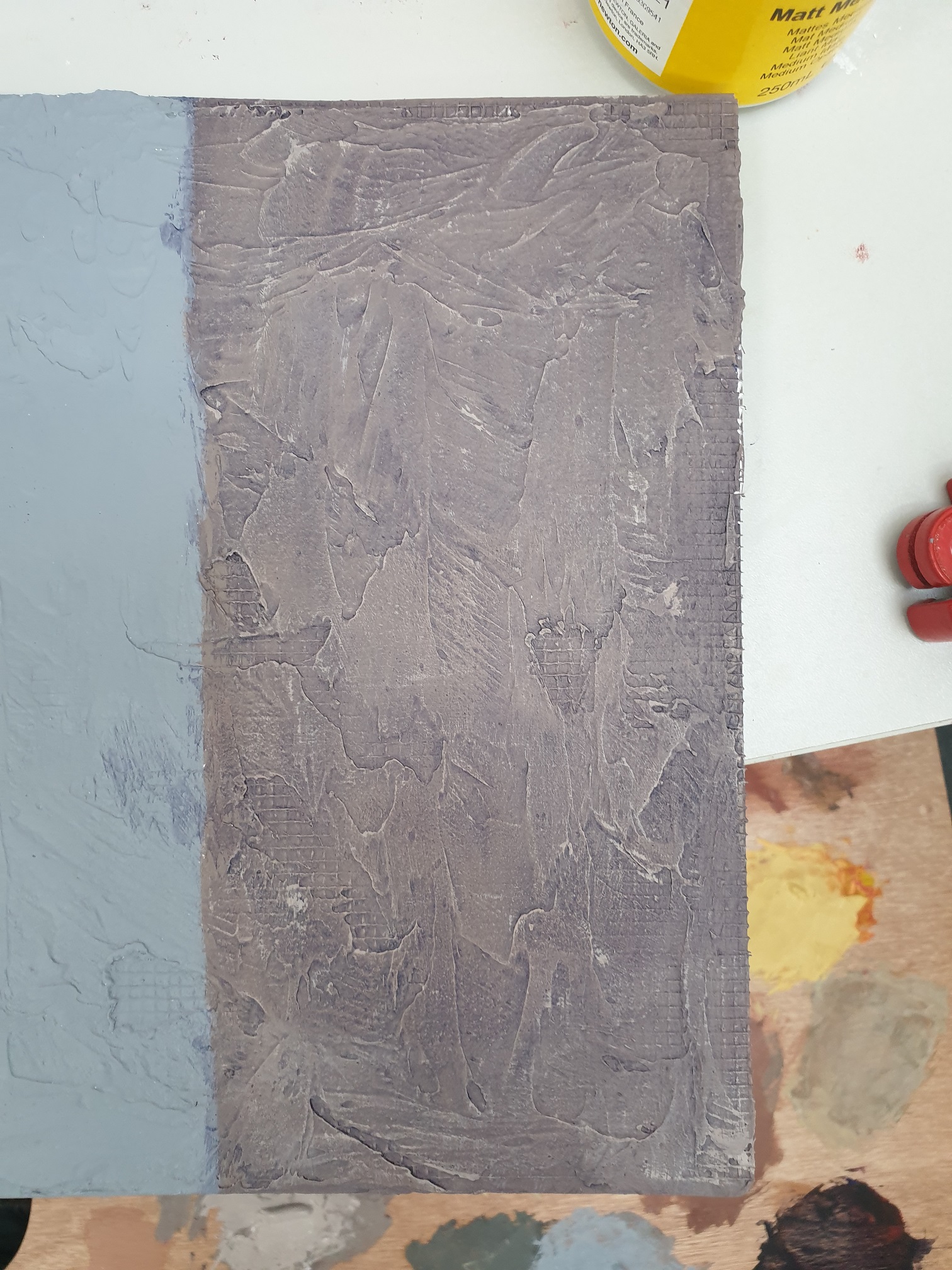
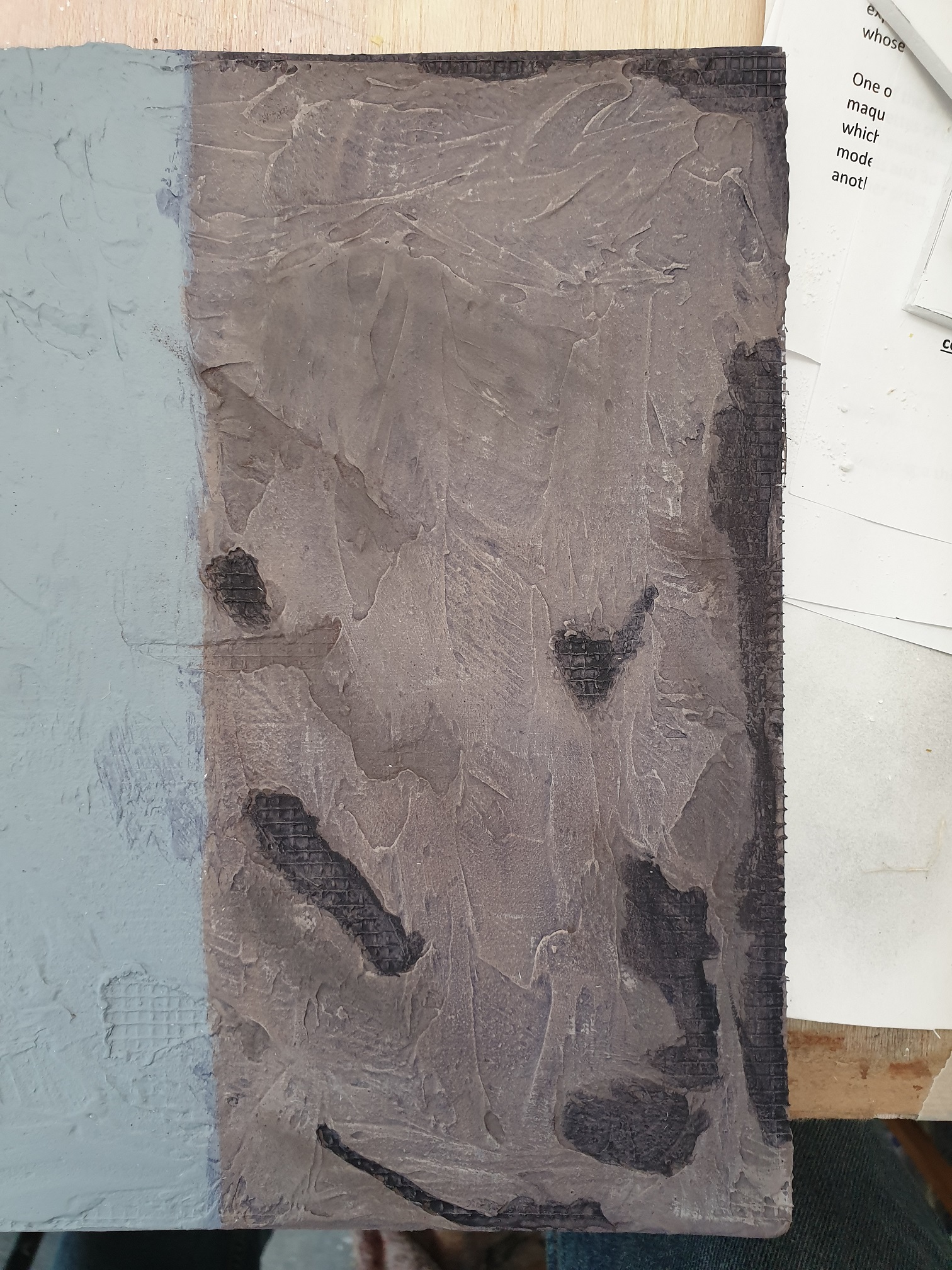
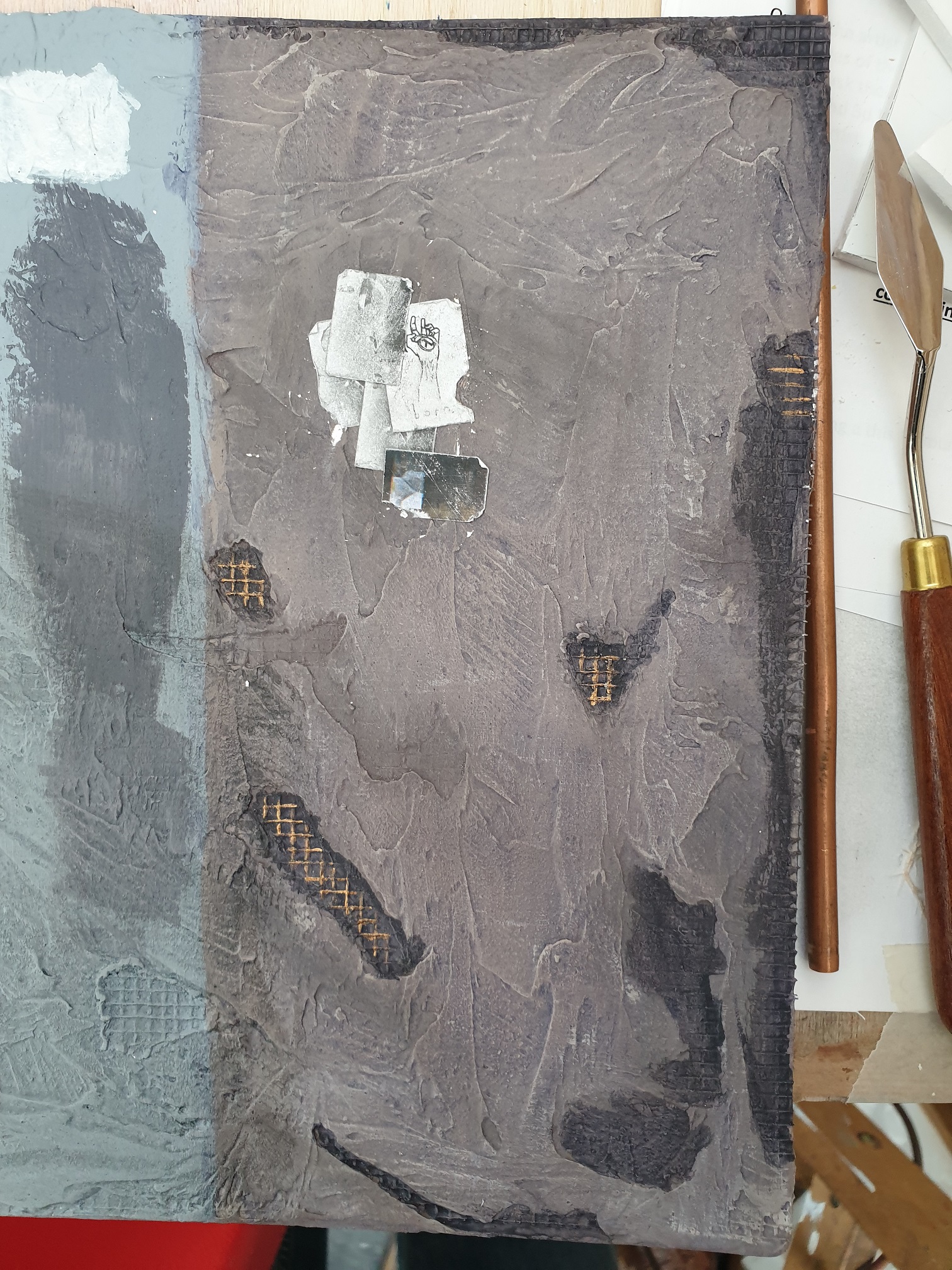
Some leftover plaster and foam core serves as a nice piece to test colours, techniques and decoration ideas. Small printouts of art (and perhaps some video game references) can serve as posters with a bit of scrubbing to scuff them. Undecided as to whether the bronze highlights on the exposed scrim tape will make it in to the final piece.
 The Only Rectilinear Chamber In The Complex